DLMP Heritage Appreciation - Black History Month
February 27, 2026
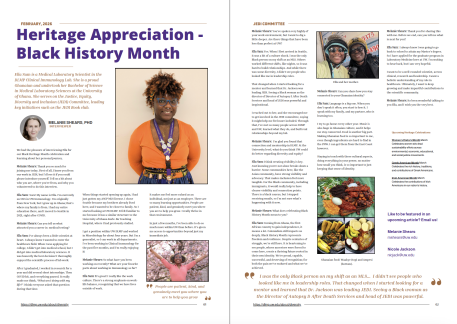
Interview by Melanie Shears, PhD
Ella Sam is a Medical Laboratory Scientist in the DLMP Clinical Immunology Lab. She is a proud Ghanaian and undertook her Bachelor of Science in Medical Laboratory Sciences at the University of Ghana. She serves on the Justice, Equity, Diversity and Inclusion (JEDI) Committee, leading key initiatives such as the JEDI Book club.
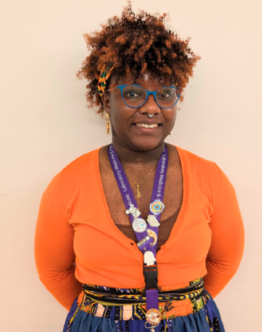
We had the pleasure of interviewing Ella for our Black Heritage Month celebration and learning about her personal journey.
Melanie Shears: Thank you so much for joining me today. First of all, I know you from our work in JEDI, but I’d love it if you could please introduce yourself. Tell us a bit about who you are, where you’re from, and why you volunteered to do this interview.
Ella Sam: Sure! My name is Ella. I’m currently an MLS in UW Immunology. I’m originally from New York, but I grew up in Ghana; that’s where my family is from. I had my entire education there, and I moved to Seattle in 2021, right after COVID.
Melanie Shears: Can you tell us what attracted you a career in medical testing?
Ella Sam: I’ve always been a little scientist at heart. I always knew I wanted to enter the healthcare field. When I was applying for college, I didn’t get into medical school, but I did get into medical laboratory sciences. It was honestly the best decision! I thoroughly enjoyed the scientific process of lab work.
After I graduated, I worked in research for a year and did several short internships. Then COVID hit, and everything paused. It really made me think, “What am I doing with my life?” I think everyone asked that question during that time.
When things started opening up again, I had just gotten my ASCP MLS license. I chose Seattle because my brothers already lived here, and I wanted to be closer to family. So I started looking at UW DLMP. It felt familiar to me because it has a similar structure to the University of Ghana Korle-Bu Teaching Hospital, where I had previously studied.
I got a position within UW DLMP and worked in Microbiology for about four years. But I’m a generalist, so I can work in all departments. I’ve been working in Clinical Immunology for the past five months, and I’m really enjoying it!
Melanie Shears: So what have you been working on recently? What are your favorite parts about working in Immunology so far?
Ella Sam: It’s great! I really like the work culture. There’s a strong emphasis on work-life balance, recognizing that we have lives outside of work.
It makes me feel more valued as an individual, not just as an employee. There are so many learning opportunities. People are patient, kind, and genuinely meet you where you are to help you grow. I really thrive in that environment.
In just a few months, I’ve been able to do so much more within UW than before. It’s given me access to opportunities beyond just my immediate job.
❝ People are patient, kind, and genuinely meet you where you are to help you grow. ❞
Melanie Shears: You’ve spoken very highly of your work environment, but I want to dig a little deeper. Are there things that have been less than perfect at UW?
Ella Sam: Yes. When I first arrived in Seattle, it was a bit of a culture shock. I was the only Black person on my shift as an MLS. Others worked different shifts, like nights, so it was hard to build relationships. And while there was some diversity, I didn’t see people who looked like me in leadership roles.
That changed when I started looking for a mentor and learned that Dr. Jackson was leading JEDI. Seeing a Black woman as the director of Director of Autopsy & After Death Services and head of JEDI was powerful and inspirational.
I reached out to her, and she encouraged me to get involved in the JEDI committee, saying it might help me feel more included. Through that, I’ve met so many people across DLMP and UW, learned what they do, and built real relationships beyond my lab.
Melanie Shears: I’m glad you found that connection and mentorship in DLMP. At the University level, what do you think UW could do better regarding diversity and equity?
Ella Sam: I think creating visibility is key. Just knowing you’re not alone breaks down a barrier. Some communities here, like the Asian community, have strong visibility and advocacy. That makes inclusion feel more tangible. For the Black community, including immigrants, it would really help to have clearer visibility and connection points. There is a black caucus, but I stopped receiving emails, so I’m not sure what’s happening with it now.
❝ I was the only Black person on my shift as an MLS... I didn’t see people who looked like me in leadership roles. That changed when I started looking for a mentor and learned that Dr. Jackson was leading JEDI. Seeing a Black woman as the Director of Autopsy & After Death Services and head of JEDI was powerful. ❞
Melanie Shears: What does celebrating Black History Month mean to you?
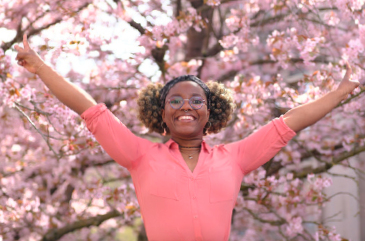
Ella Sam: Coming from Ghana, the first African country to gain independence, it means a lot. Colonialism still impacts us deeply. Black History Month represents freedom and resilience. Despite centuries of struggle, we’re still here. It is heartening to see people, whose ancestors were forced to come here, create a thriving future rooted in their own identity. We’re proud, capable, successful, and deserving of recognition; for both the pain we’ve endured and what we’ve achieved.
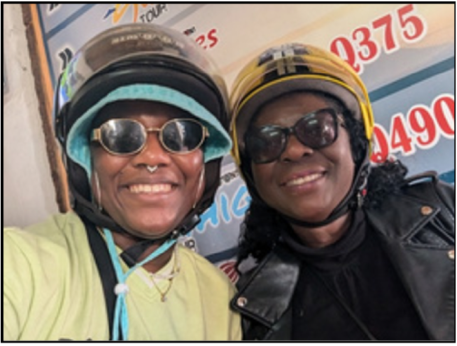

Ella and her mother.
Melanie Shears: Can you share how you stay connected to your Ghanaian identity?
Ella Sam: Language is a big one. When you don’t speak it often, you start to lose it. I speak with my family, and my partner, who is learning too.
I try to go home every other year. Music is also huge in Ghanaian culture, and it helps me stay connected. Food is another big part. Making Ghanaian food is so important to me, even though ingredients are hard to find in the PNW. I can get them from the East Coast however.
Staying in touch with these cultural aspects, doing everything in your power, no matter how small you think, is so important to just keeping that sense of identity.
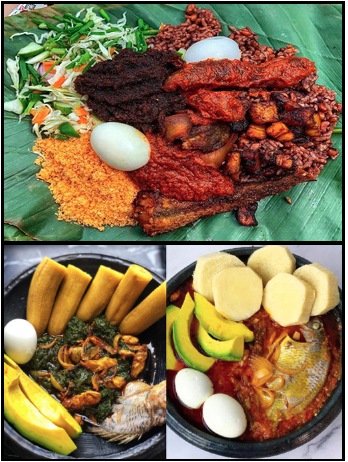
Ghanaian food: Waakye (top) and Ampesi (bottom).
Melanie Shears: Thank you for sharing this with me. Before we end, can you tell me what is next for you?
Ella Sam: I always knew I was going to go back to school to attain my Master's degree. So I have applied for the graduate program in Laboratory Medicine here at UW. I'm waiting to hear back, but I am very hopeful.
I want to be a well-rounded scientist, across clinical, research and leadership. I want a holistic understanding of my role in healthcare. Ultimately, I want to keep growing and make impactful contributions to the scientific community.
Melanie Shears: It's been wonderful talking to you Ella, and I wish you the very best.
Upcoming Heritage Celebrations
Women’s History Month – March: Celebrates women who lead sustainability efforts across environmental, economic, educational, and social justice movements.
Greek American Month – March: Celebrates the rich history, traditions, and contributions of Greek Americans.
Irish American Month – March: Celebrates the contributions of Irish Americans in our nation's history.
Would you like to be featured in an upcoming article? Email us!
- Melanie Shears (mshears@uw.edu)
- Nicole Jackson (nicjack@uw.edu)