DLMP Heritage Appreciation - Native American Heritage Month
November 26, 2025
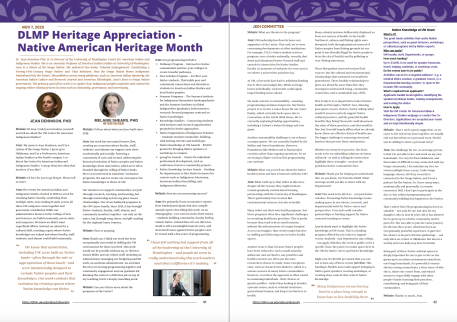
Interview by Melanie Shears, PhD
Dr. Jean Dennison is Co-Director of the University of Washington Center for American Indian and Indigenous Studies. She is an Associate Professor of American Indian Studies at University of Washington. Jean is a citizen of the Osage Nation. She authored two books ‘Colonial Entanglement: Constituting a Twenty-First-Century Osage Nation’ and ‘Vital Relations: How the Osage Nation Moves Indigenous Nationhood Into the Future. She publishes across many platforms, such as American Indian Quarterly, the American Indian Culture and Research Journal and American Ethnologist. Jean’s focus is Osage Nation government. The primary goal of her work is to explore how indigenous peoples negotiate and contest the ongoing settler colonial process in areas such as citizenship, governance, and sovereignty.
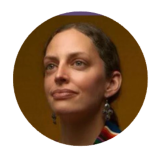
Melanie Shears: Hi Jean. Could you introduce yourself and tell me about the UW Center for American Indigenous Studies?
Jean Dennison: My name is Jean Dennison, and I’m a citizen of the Osage Nation. I grew up in Oklahoma, and I’m a Professor in American Indian Studies on the Seattle campus. I co-direct the Center for American Indian and Indigenous Studies. I can go deep into what that involves, if you like?
Melanie Shears: I’d love for you to go deeper. Please tell us more.
Jean Dennison: The Center for American Indian and Indigenous Studies started in 2018 as a tool for retaining Native faculty. Leadership from multiple units, now totaling 15 units across all three UW campuses came together and generously contributed. While our administrative home is in the College of Arts and Sciences, we build community across units and campuses. We knew we didn’t want superficial efforts. Instead, we aimed for a cultural shift, creating a space where Native knowledges are valued and where faculty, staff, students, and alumni could build community.
❝ We know that universities, including UW, were built on Native lands—often through the sale or appropriation of those lands—and were intentionally designed to exclude Native peoples and their knowledges. Our work combats that exclusion by creating spaces where Native knowledge can thrive. ❞
Melanie Shears: Tell me about what you have built since 2018.
Jean Dennison: Our work has two main focuses; first, creating an ecosystem where faculty, staff, students, and alumni can support each other academically and socially, fostering a community of care; and second, addressing the historical exclusion of Native peoples and Native knowledges from universities, which were often founded through the selling of Native lands. We’re not interested in tokenistic “inclusion” programs. We want to create our own spaces for Native knowledges to thrive at UW.
Our mission is to support communities, not just through research, teaching, and learning, but through mentorship and strong place-based relationships. One of our hallmark programs is the UW Canoe Family. Since 2021, it has brought Native students, faculty, staff, alumni, and community members together—not only on the water, but through song, dance, and gift-making for the regional Canoe Journey.
Melanie Shears: That is so amazing.
Jean Dennison: Thank you. I think our work has been exceptionally successful in shifting the UW environment for those involved. This work would not be possible without my co-director Danica Miller and our robust staff, including an administrator managing our budgeting and HR work, an assistant administrator, an assistant director overseeing programming logistics and community engagement and our graduate RA. Running the center is a full-time job on top of my teaching, but it’s deeply rewarding work.
Melanie Shears: Can you tell me more about the programs at the Center?
Jean Dennison: Our programming includes:
-
Pathways Program – Outreach to Native communities and two-year colleges to create transfer pathways.
-
New Scholars Program – For first-year Native students. This builds peer and community connections and introduces students to American Indian Studies and local Native peoples.
-
Summer Programs – The Summer Institute for Indigenous Humanities (undergraduate) and the Summer Institute on Global Indigeneities (graduate), both intensive, research-focused programs centered on Native knowledges.
-
Knowledge Families – Connecting students with mentors and research opportunities grounded in Native approaches.
-
Native Organization of Indigenous Scholars – Graduate student community-building, with writing retreats and workshops.
-
Native Knowledge at UW Awards – $3,000 grants for bringing Native speakers or workshops to campus.
-
qacagʷac Awards – Grants for individual professional development, such as conference travel or community projects.
-
Native Knowledge Lecture Grants – Funding for departments to hire Native lecturers for courses such as Indigenous Astronomy, American Indian Storytelling, and Indigenous Rhetorics.
Melanie Shears: How are you measuring success?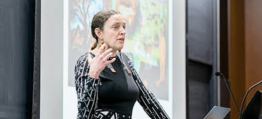
Jean Dennison: We primarily focus on narrative reports from funded participants but also compile annual reports describing this work. As an ethnographer, I see success in the lived stories—students building community, faculty feeling valued. Native-related data sets are often too small to tell a meaningful numeric story, and structural issues against Native peoples can’t be erased with a few years of programming.
❝ I have felt nothing but support from all of the leadership at the University of Washington – and people do seem to really understand why this work matters and what a difference it's making. ❞
Melanie Shears: What are threats to the program?
Jean Dennison: UW leadership has thus far been very supportive of the Center. That said, we’ve seen concerning developments at other institutions. For example, UCLA’s Native student services program, once a leader nationally, recently shut down and eliminated Native-focused staff and canceled a cluster hire for Native Studies faculty. In moments of cutbacks it is very easy to see where a universities priorities lay.
At UW, a few units have had to withdraw funding due to their own budget hits. While not huge losses individually, such trends could signal larger funding issues ahead.
My main concern is sustainability—ensuring programming continues long term. One future project is to secure a canoe house for our canoe family, which currently lacks space due to renovations at the ASUW Shell House. We’re currently exploring funding opportunities, including 4 Culture’s Native Heritage and Arts grant.
Another sustainability challenge is our reliance on major grants. We are currently funded by the Mellon and Gates foundations. However, foundations like Mellon tend to fund project creation rather than ongoing operations. So we are trying to figure out how this programming can continue.
Melanie Shears: What can you tell me about the Native health system and how it interacts with the UW?
Jean Dennison: What I will say is that tribes in this area, despite all the reasons they might hesitate, remain genuinely excited about forming partnerships with the University of Washington. This is particularly true in areas like environmental sciences, but also in health.
Many tribes run their own health programs, but those programs often face significant challenges in recruiting healthcare providers. This is partly because they tend to be in rural locations without the infrastructure of a major hospital. As you can imagine, that creates major barriers to staffing and delivering care in Native health spaces.
Another issue is that, because Native peoples have been reduced to such a small minority within our own territories, our priorities and health concerns are often not the ones
researchers choose to study. Some exceptions exist, such as research into diabetes, which is a serious concern in many Native communities. However, even then the approach is often rooted in examining individuals—their choices or genetic profiles—rather than looking at broader systemic issues, such as colonial structures, generational trauma, and long-term barriers to health.
Many colonial systems deliberately displaced us from our sources of health. In the Pacific Northwest, salmon and fishing rights were disrupted, both through physical removal of Native peoples from fishing grounds (at one point it was literally illegal for Native people to be in the city of Seattle) and by polluting or over-fishing waterways. These disruptions removed not just food sources, but the cultural and environmental relationships that sustained our health for generations. Those healthy relationships to place are about far more than diet; they encompass mental well-being, community connection, and a sustainable way of life.
This is why it is so important to look at Native health not through a “deficit” lens, blaming poor genes or poor choices, but by asking: what would it mean to actively support Native cultural practices, and the powerful health benefits they bring? Research could document the value of these practices, and that would be fine, but it would largely affirm what we already know: these are effective forms of health care. The bigger challenge is removing structural barriers that prevent their continuation.
Whether in research or practice, the focus needs to be on embedding solutions we know will work—as well as telling the stories that highlight these strengths—not just the problems Native communities face.
❝ Being Indigenous means having lived in a place long enough to know how to live healthily there. ❞
Melanie Shears: Thank you for helping me understand this. As you know, I’m from the DLMP. What message would you like to share with my Department?
Jean Dennison: This work is for all of us – not just Native scholars. Promoting Native knowledge means making space in our classes, research, and departmental work for Native voices and perspectives. Your unit could consider partnerships or funding support for Nativecentered teaching or events.
I particularly want to highlight the Native Knowledge at UW Grant. This is a funding program offered by our Center to support events. Anybody—any Department, any college, —can apply. Whether the event is public or for a specific class, the point is to make space here at the UW for Native voices and Native knowledge.
Right now it’s $3,000 per award that you can use to host any of these events (see Box). This funding is flexible and could support bringing in Native guest speakers, hosting workshops, or creating class content that centers Native knowledge.
Melanie Shears: That’s such a great suggestion. As we come to the end of our time together, we usually end our interviews on a personal story. Would you be willing to share a personal story?
Jean Dennison: One challenge for me, as an Osage person, is that I’m not able to live and work on my own homelands. I’m very far from Oklahoma, and that makes it difficult to stay connected with my Osage community. I do maintain my ties; we return multiple times a year, I take Osage language classes, all of my research is connected to the Osage Nation, and I host a podcast for the Nation. So, I have many ways, academically and personally, to remain connected. Still, I don’t get to participate in the day-to-day cultural programming and community building that happens in the Nation.
That’s where this UW programming has been so valuable – not only for me, but also for my daughter, who is now 12 years old. It has allowed her to grow up in a Native community and be part of it. She was able to join the canoe journey for the last three years, which has been an exceptionally powerful experience. It gave her the chance to be part of Native gatherings — not only when we return to Oklahoma, but also in a weekly and even daily way here in Seattle.
Being part of these Native cultural spaces is deeply important for me to give to her as she grows up in an urban environment away from our Osage homelands. It’s powerful to ensure she has strong connections, a clear sense of who she is, where she comes from, and what it means to respectfully engage with other people’s lands: learning their practices, contributing, and being part of their communities.
Melanie Shears: Thanks so much, Jean.
Native Knowledge at UW Grant
What is it? The grant funds activities that center Native perspectives, such as guest lecturers, workshops, or cultural programs led by Native experts.
Who can apply? UW faculty, staff, Departments, or groups.
How much funding? Up to $3,000, to be used for speaker honoraria, travel, lodging, materials, or workshop costs.
Do the events have to be public? Activities can be for a targeted audience—e.g. a medical ethics seminar, a graduate course, or a Departmental learning session—or open to the broader UW community.
What’s required from applicants? Applicants handle local logistics, identifying the speaker/workshop leader, making arrangements, and hosting the visitor.
How to Apply Visit the UW Center for American Indian & Indigenous Studies webpage or contact the Co-Directors. Applications are accepted year-round and are kept intentionally simple.
Would you like to be featured in an upcoming article? Email us!
- Melanie Shears (mshears@uw.edu)
- Nicole Jackson (nicjack@uw.edu)